I feel I have been here long enough to know what smells distinctly ‘Japanese’: and Tender Peach, a warm and inviting, fresh musky liquid body soap kind of scent that is immediately familiar to me from those that surround (floral, clean peach skin, deeper sandalwood – it reminds me of the entrances to rotenburo onsen/hotsprings, wearing it I feel rather relaxed) most definitely fits into this category.
On A Cloud, the most recent release from the Tokyo based outfit, is also cool and semi-relaxing but also a little odd ( J – Scent does like to experiment and has some unusual perfumes on its roster ): this is a sugared, minty cloud with notes of fresh peppermint, vanilla and ‘milk’ – the effect akin to enjoying those beige coloured butterscotch mints I used to enjoy at my grandparents’ house but whose name, at this moment, elude me. I have semi-considered getting this one — but when would you wear it?
Another well made item in the J Scent I am currently half stalking is Cafe, which matches a rich, adult lady orange blossom a la original Jean Paul Gaultier (‘Classique’ to some of you) with a rather daring heart note of coffee. The effect is peculiar but magnetic: rich; erotically mellow. ‘Tastefully bold’, you might say. Mmmm….
I wonder what they have in store for us with their next release, Holy Animal ?
Gone are the days when I would avidly follow up on every new Serge Lutens release. In the early days we perfumisti lapped them all up as though he were God. The perfumes stood out as so different from what else was around back then in the early nineties: the original – much, much, denser, thicker, sweeter, ambrous, complex, atmospheric elixirs that came at affordable prices felt newly provocative: the bitter green of Sa Majesté La Rose, the unfettered exotic amber of Ambre Sultan as it was back then, so heavy and spicy; the (for me) fascination but utter revulsion of Arabie – whether you liked them or not those perfumes were exceedingly good value and genuinely exciting.
In the intervening years I have had many of them, as you probably have too. I have bought perfumes at the head office at the Palais Royal (Sarrasins, Cuir Mauresque), but not really worn them. I have gulped down others by the multibottle (the original Un Bois Vanille, Borneo 1834, Louve); toyed with others – I do like Vitriol D’Oeillet and Cèdre, for instance. Others stand there, unloved (like Datura Noir). Still others I wish I had managed to get my hands on (Dent De Lait; Rahat Loukoum; Fourreau Noir – perhaps his most underrated amber).
The magnetism towards the man himself and his brand persists.
I have always liked the Lutens florals – A La Nuit , Tubereuse Criminelle – and have worn Nuits De Cellophane (a bitter, synthetic mandarin osmanthus) as a work scent. And in fact The Lady Tamer – as in a female tamer of other things, animals, rather than some brute who oppresses and defangs his women, is like a tropical version of the latter – there is something blinding and headache inducing about it (somehow, the existence of a Serge Lutens Frangipani had eluded my conscious, which I had to rectify the other day in Tokyo – after the Guerlain Vetiver Parfum, this was the other scent I knew I had to smell).
It smells deep pink. It is bright (dazzling, in a way). Frangipani, bitter almond and ylang (and presumably a lot of jasmine and tuberose as well), with some unpleasant initial indolics that make the entirety smell very much like an air freshener used to cover up the smell of the doo doo – like Glade Purple Lilac, or one of those ultra fake florals that masken, but can never hide, the products of our inner recesses. Thinking I would be buying this, instead I was slightly recoiling. On card later, smelling it again today, the plumeria note is far more alluring and I was reminded of the eighties pimiento-flecked editions of Chanel Gardénia, as well as Rochas’ ill fated Poupée (a strange, hazelnut inflected high pitched tuberose I still have some affection for). Shrill. Kinda cute. But yes : Poupee indeed.
It’s been a while since I travelled up to Shinjuku Isetan specifically to try and potentially actually buy a new perfume. But I have always loved Guerlain Vetiver and the idea of a ‘parfum’ variant was just too intriguing to pass up. Buoyed up by a positive review on Persolaise I went straight to the Guerlain counter on an (unseemly busily Golden Week Saturday) and asked to smell it: within five minutes I had bought it. I love the bottle. The green colour. The label details. The heavy feel of it in the hand. The sense that the soul of the scent – the basic DNA – that husky, tobacco nutmeg with the vetiver and tonka that make it so distinctive – was still intact, even if some of the softer details have been swept away in the process.
Thirty years ago or so I used to hover about a bottle of the original Vetiver edt in a shop in Cambridge with a slightly tattered box (probably more tattered each time I went in there because it was me doing the tattering); eventually it went on sale and an ever increasingly perfume obsessed student could then buy it. It was a new departure for me , scent-wise, but there was something haunting about the perfume, like a cello played in a smoke- timbered house. It really tugged at an unknown chamber within me. Those melancholy, musky-citric, more profoundly human and poetic edges have been shorn away, and I miss them. But this slightly flintier, darker variant, which prolongs the essential vetiver note at the heart with a subtle note of juniper and coriander for a slightly basilic green astringency, is something I will wear regularly, probably layered with a touch of vintage Shalimar. It is me. And much better than some reformulations I have had over the years, where I always felt an overpreponderance of unnecessary, inexpensive ingredients. This is streamlined, simple. I made the right choice.
N: You like and wear marine perfumes much more than I do.
D: Yes, especially in summer – in fact, almost exclusively so.
N: On roiling hot Japanese August days I will sometimes wear some Kenzo Pour Homme for nostalgia purposes (that stick deodorant works well with the original unreformulated bottle I still have in the frosted glass bamboo), and I can do aquatic tropicalic florals quite happily, but somehow algae, waves and salt smell better on you, even though you are not a natural swimmer.
D: Never been a water baby, sadly, unlike you.
N: I have never understood people who prefer municipal pools. Warm, chlorinated water potentially laced with old piss. Goggles that suck your eyeballs in, caps that hurt the scalp and make you look foolish. And then swimming around in formulation with some calloused old foot in your face as you swallow the ‘water’. Yuck. Give me a rock to dive off from and some ocean anyday, even when you go headfirst straight into a school of jellyfish, as you will remember I did twice at the beach in Hayama. I had quite the stinging.
D: Yes, your shoulder and arm were like strawberry jam. A real toxic baptism.
N: And yet I still went back the next year and the same thing happened again! I just love the beach there.
Onto the oceanics as a genre. I have been into perfume long enough to remember the precise shock of the arrival of the aquatics; Sunflowers, New West, then Kenzo and Escape and all the rest; they felt unnatural, weird – it was like splitting the atom; iconoclastically new and different. Cool Water struck me as being a bridge between the two worlds – oceanic-ish – but didn’t have the full bonanza of later horrors such as Acqua Di Gio Pour Homme, where you were given the full symphonics of every possible note shot through with overdoses of calone to the point that you could taste it in your dinner or your drink at the bar. I am really glad those days are over: the unnatural repugnance of Calvin Klein Escape and Givenchy Fleurs D’Interdit which then of course later spawned the unforgiveable Chloe.
Anyway, I digress. The modern oceanics are more ocean centered, more focused, less everything but the kitchen sink, and I prefer that. You smell amazing in Filippo Sorcinelli’s Nebbia Spessa for example, and I really like you in Heeley Sel Marin and Art De Parfum’s Le Joker, although for me, the correct dosage is vital. Too much of any of these – of any marine – and I am gagging in revulsion. For me the weather, the amount, the surroundings all are very key. I am still a bit daunted by this genre of fragrance, ultimately.
D: Yes, I loved Nebbia Spessa as soon as I smelled it. A salty sweet halo that is modern and cooling and minimalistic – and yet puts me into a vast misty reverie. It’s kind of genius I think. Heeley Sel Marin adds in a little citric warmth – Heeley scents are suave but I like that about them, not a muddy number among their range – and Le Joker has a more turpentinic tang and that nutmeg, which is very sexy – more grit to it. Three great scents, but yeah, apply with restraint: there’s a thin line between suspending yourself in salty bliss and poisoning those in your proximity. I think I just adore marine and ozonic notes with musks and oakmoss.
N: Francesca Bianchi’s new creation The Mariner’s Rhyme is an exquisite marine perfume. The tone is similar to Sel Marin in its mid toned mellowness, but without the latter’s slightly overconceited suavity (Marin just loves his own sillage just that little bit too much). I find this one of the most poetic marines I have smelled, really cool and relaxing, but with an edge. The citruses and herbs are all in perfect balance, the oceanic notes lilting and drifting on the breeze, but there is also something else lurking beneath – something that really draws you in. I think she has nailed this one.
D: What a wonderful list of ingredients: bergamot, grapefruit, lavender and elemi on top – lavender gives a sort of leathery aromatic quality when you first spray it; orange blossom, iris, ozonic notes at the centre – love that iris is there – so classy; ambergris, oakmoss, patchouli, incense at the base. Definitely comparable to Sel Marin – refreshing and cooling, elegant – but as you say, it has an added enigma. Really good.
N: In comparison with the oceanic serenity of The Mariner’s Rhyme, Pissara Umavijani’s Grecian sea odyssey, Pelago – a marine iris fougere – is more assertively powerful and unforgettable, but I have my own fundamental personal issues with the fougere- as soon as a perfume dries down to that macho swagger I get angry as a Pavlovian Rottweiler – but that is just due to my own history with aggressive males and their scented associations. There is some of that in the base of this scent – Pelagos is a real tuxedo killer with a dark heart of poisonous indigo (the new James Bond? or his new nemesis?); a very hot individual that I can’t help being attracted to up to a point until he reveals that aggression – but the perfumer nimbly avoids the usual pitfalls of straight manliness that put me off the last perfume, La Rhapsodie Noire, where the delicious lavender licorice of the top ceded eventually to a man we have all met a thousand times before. I think the cool iris in the top here of Pelagos combined with the darker notes is very clever and original, like a muscular nude in satin sheets of midnight blue – it is extrait strength and it really feels like it! – but I can’t be entirely objective about Pelagos. I was with Pissara when she was wearing it that day in Ginza, and smelling it again is one of the most sensorially immediate experiences I have ever had. I am there with her again, viscerally, immediately, when I smell it. The court therefore orders the jury not to consider this evidence.
How does it work on you?
D: Well, I liked the opening and the ending, but there is something hovering about the middle that I just didn’t get with. It’s powerful and impressive – a sultry heaviness at the heart (that must be the indolic jasmine with orris, thyme and tonka bean – buttressed by woods on top and below – pine, sandalwood, vetiver) like a vintage perfume in its way – but ultimately not for me. I’m an Issara and Le Pavillon d’Or boy through and through – I don’t really understand Pelagos – maybe it is the jasmine adding a weighty twang? Sure it will work wonders on some, though. It’s very idiosyncratic, as you’d expect from Pissara – she’s always bold and interesting.
But you omit my favourite modern salty marine scent: the luxuriant, lilting, megawafting aquatic dreamboat, Mémoires d’une Palmeraie 11. I know you tend to shudder when I pick it up and once said I could fill a soccer stadium with two squirts of that (I have regularly transformed the bus with it).
N: I have an excellent memory connected with that one. Following you on the bike when we went out for a stroll one summer. One shot to the wrist, in the air around you, was like actually being by the sea. So salty it made me physically thirsty.
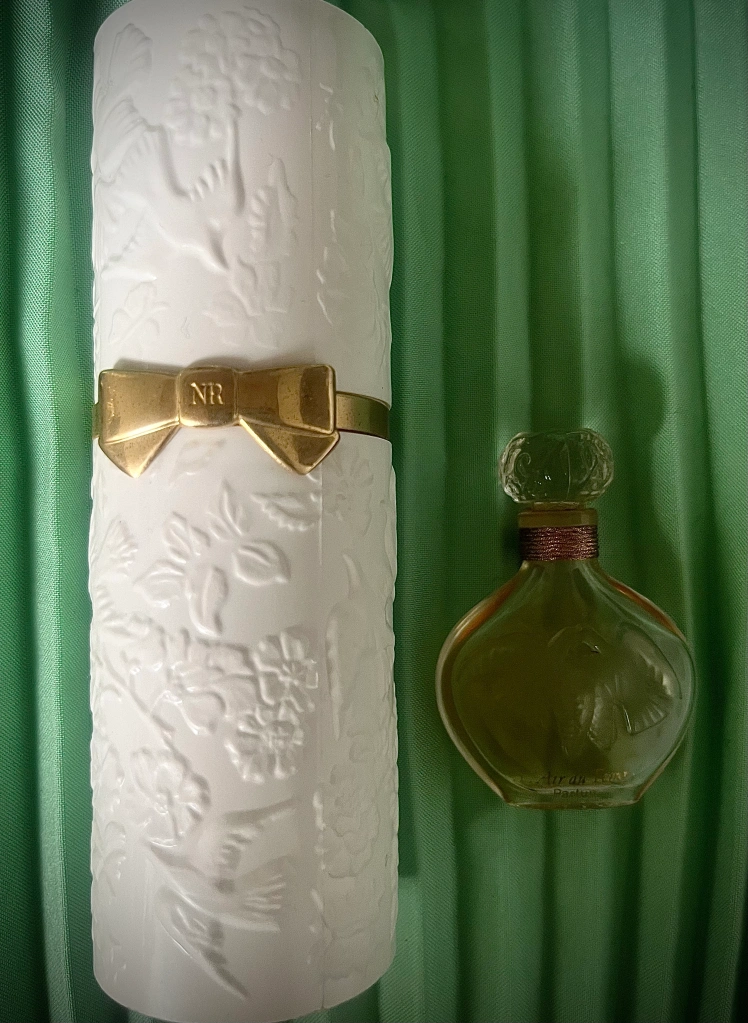
We would never wear L’Air Du Temps (within minutes of application last night D began sprouting a curvy hourglass figure – it’s just too old school, deep musky estrogen feminine ) but the perfect, eugenolic clove and carnation aldehydes in this immaculately preserved vintage (80’s?) Ricci canister that he found yesterday for £2.50 (¥500) made me feel as though I were standing on a never ending beach : miles and miles of sea and sky ; a sense of euphoric possibility.
Yes, it’s a masterpiece. The extrait you see pictured is also pristine, softer, more cherubimic; together, they form an immutable part of the collection.
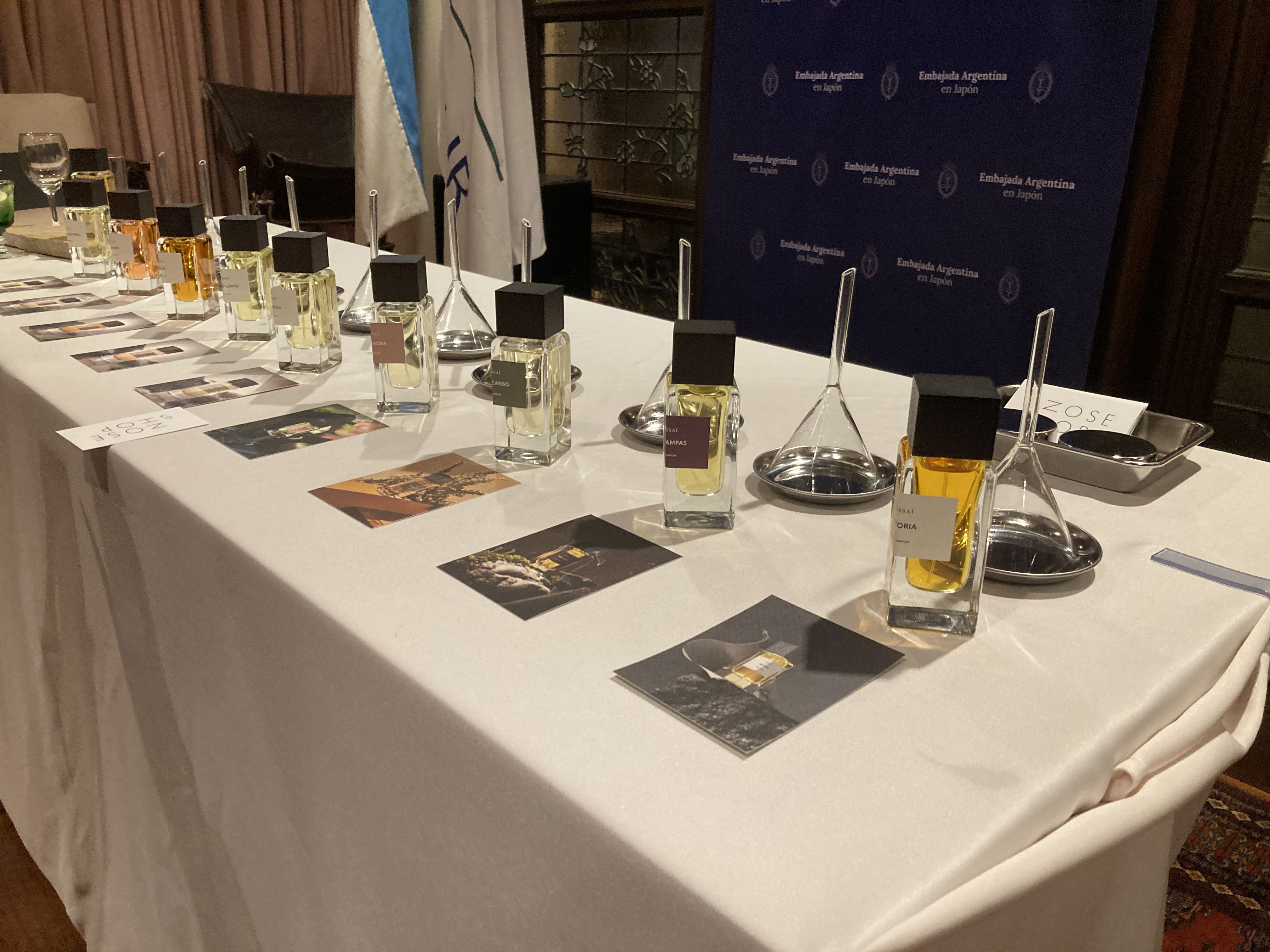
As Neil was otherwise disposed, on Friday evening I attended, on his behalf, the Nose Shop’s event at the Embassy of Argentina, introducing the perfumes of Frassaï. This Argentinian niche brand was featured in Neil’s perfume workshop in Honolulu, as the ‘scent bar’ – a contemporary niche brand sampling station – had three Frassaï scents: Blondine (2017), A Fuego Lento (2018) and Victoria (2022). Blondine had proven the most popular of the three at the workshop, although actually we had warmed to A Fuego Lento and Victoria, which are rather more reserved and unusual compositions. On Instagram Neil wrote: “in this era of unsubtle tooth-rotting scents for women, how wonderful to smell perfumes that are rich yet intriguing and delicately put together” so this was an excellent chance to sample the rest of the range and meet the founder, Natalia Outeda.
The Argentinian Embassy is tucked away in Hiroo, next to Arisugawa Park, in a leafy, upmarket district of Tokyo between Ebisu and Azabu. I was half expecting to have to present my passport/have my bags searched upon arrival, but actually the embassy is pretty chill. There were few formalities; just a smiley concierge and the Nose Shop staff, who choregraphed the whole event with considerable efficiency and charm. I presented our business cards at reception, and was conveyed into the function room, where Natalia was seated with her Japanese interpreter and the ten perfumes that comprise her range, flanked, as you would expect, by the flags of Argentina and Japan. It’s an unfussy space with three rooms in muted tones, hung with oil paintings: a small reception area, a larger room for meetings and presentations and a long antechamber with a large table set for mate tea and wine tasting afterwards.
The talk began with the Argentinian ambassador, Mr. Eduardo Tempone, giving a brief introduction in Spanish, and then the Nose Shop compere introduced topics and questions which Ms Outeda answered in English, followed by an explanation in Japanese by her interpreter. She started by introducing the Frassaï brand, which is now just over a decade old (founded 2013) and has ten scents in its range, eight of which were inspired by the nature, history and musical and literary culture of Argentina. It is one of the few niche perfume brands from Argentina (perhaps the most famous being Julian Bedel’s Fueguia 1833, which has a shop in nearby Roppongi Hills) and the first fronted by a woman. Given the fast pace of most perfume production and marketing these days, Frassaï prides itself on taking its time: developing the scent story behind each creation, sourcing natural and sustainable ingredients, where possible from Argentina, and collaborating with perfumers that resonate with Ms Outeda’s approach. Having worked with top perfume brands in New York from 2005 until she relocated to Buenos Aires and set up Frassaï, she made the conscious decision to eschew the rapid pace of commercial perfumery and make slow perfumes – and this was a concept she continually came back to throughout the talk – with the key inspiration coming from Argentinian culture: the elegant capital itself, the pampas grasslands and the dramatic landscapes of Patagonia, the iconic gaucho, Astor Piazzolla and the tango, as well as influential artistic figures such as the twentieth century doyenne of letters, Victoria Ocampo. Early praise and recognition from Luca Turin set the brand off to an auspicious start.
Ms Outeda started the evening’s scent journey with explanations of four scents from her collection that foreground her touchstone Argentine inspirations, kicking off with Verano Porteño (2017) (potent summer, the title taken from a Piazzolla tango) which aims to evoke a gentle breeze wafting through Buenos Aires of a summer evening, with bergamot, clementine, cardamom, imperial jasmine, vetiver and Argentinian yerba mate. I was struck by the white flowers and green stems: it’s like crushing white summer flowers – jasmine, magnolia – petals and leaves, in your hand – green with gentle undertones of citrus – notes that feel natural and in harmony – no shrill chemicals here to needle the brain. A nice opener.
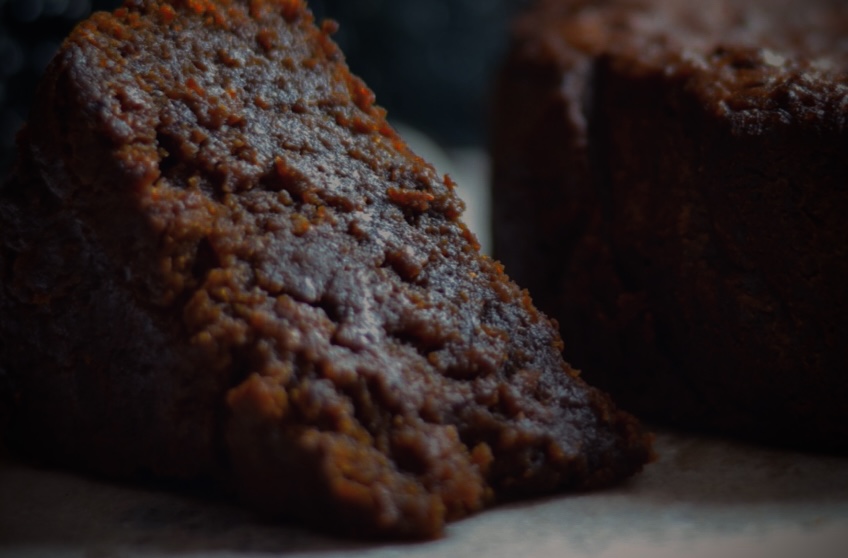
She moved on to Teisenddu (2018), one of the brand’s most popular products, a spicy, bitter orange and mimosa accented, rum-soaked number, which straddles the wood and gourmand categories, and is based on Natalia’s grandmother’s cake recipe. This black fruit-filled burned raw sugar confection was adapted from a recipe brought to South America by Welsh immigrants in 1865 and Frassaï’s stealthily rich interpretation is far from the characteristic blaring vanillarama of many gourmands. Warmth with depth and mystery. Recommended.
Then on to Cuir Pampas (2020) – one of two scents taking inspiration from the landscape of the pampas grasslands- this more masculine accord (though actually billed as unisex) takes on the nomadic el gaucho cowboys, often pictured on horseback with a stripey blanket about their shoulders (famously, one of the inspirations for spaghetti westerns as well as countless cat walk lewks, gaucho style interestingly evolved from a melange of native fabrics and Spanish settler equestrian garb): as you might expect, a drier concoction of leather, woods and grasses, with green mate and black pepper thrown in for moisture and pep; earthy, leathery, somewhat green.
On to Victoria (2022), (which I was wearing), a tribute to Victoria Ocampo (1890- 1979), one of the leading literary figures of South America for much of the twentieth century, friends to many prominent artists, writers and composers, and an emancipated modern woman who used her fortune to sponsor and promote the arts. This scent features tuberose but in a less powerhouse buttery mode than other renditions, it is combined with oud and pink litchi – an example of choosing “qualitative ingredients to highlight a story.” Ms Outeda commented that the pairing of tuberose and oud is an unusual one and I certainly appreciated the unclichéed restraint in that accord, so used to (and increasingly bored with) rose ouds. The oud seems to make the tuberose less creamy, whilst the tuberose prevents the oud from dominating the composition as it is often wont to do. I enjoyed wearing Victoria, with its soft sweet floral drydown. I’m not sure if it conjures literary or emancipated or, as the blurb has it, ‘bold,’ but its pleasant aura was enjoyable to lean into from overture to dying ember.
Then we moved on to her new release, Dormir Al Sol (2024), about falling asleep in the sun, a metaphor for living in the sun-kissed moment. This is a chirpy scent with notes that include lime and mandarin over mimosa, guaiac wood, saffron, brandy, vetiver and patchouli. I have it on my hand now as I write this and after the initial citrus evaporates, I feel a sweet creamy saffron note predominate. I would like to wear this in the sun to see what happens, and though saffron is not really my thing, I can appreciate the modernity and sunlit optimism of Dormir Al Sol.
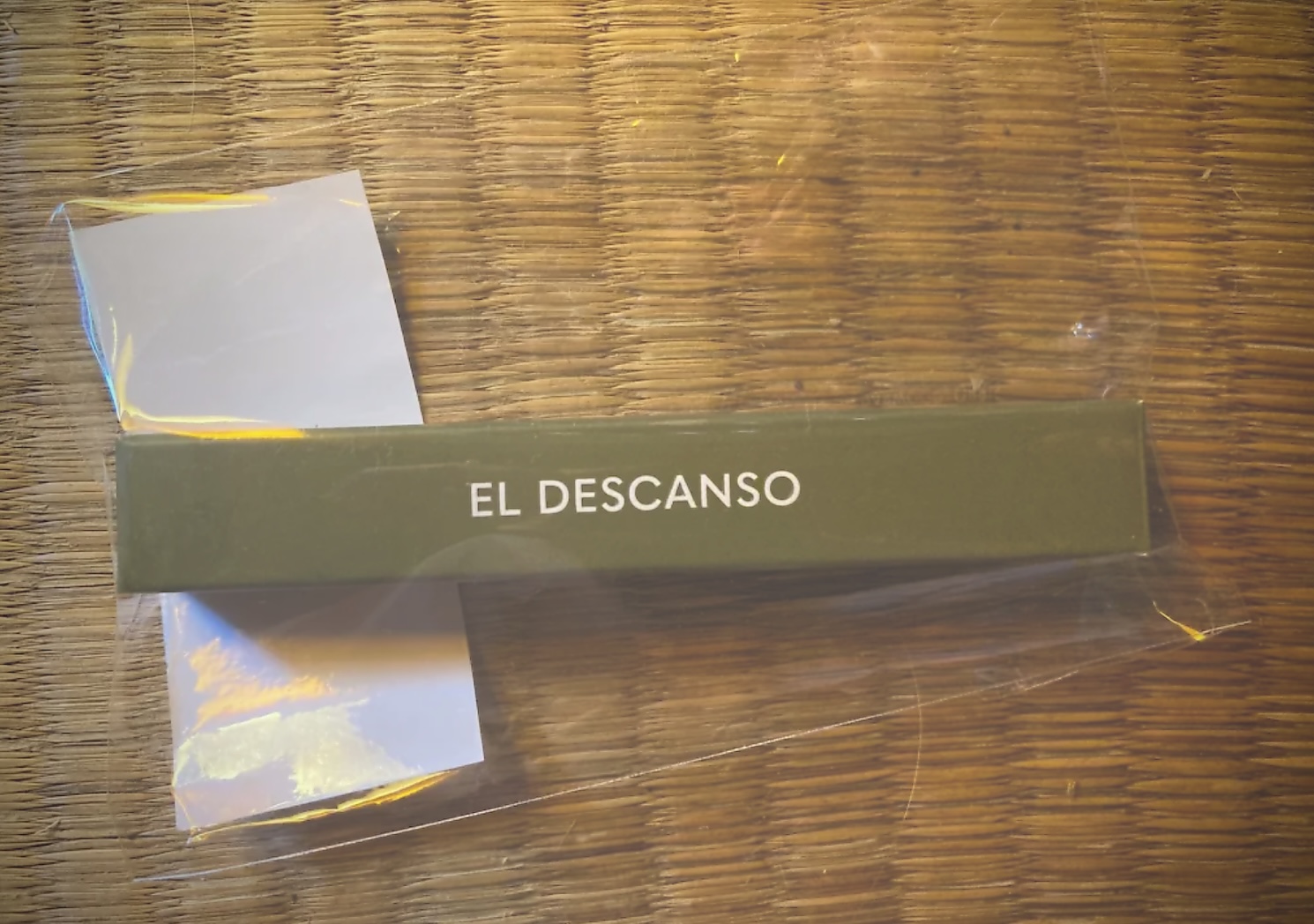
When asked about her favourite scents she selected A Fuego Lento (2018), a slow burn of sueded jasmine (that is also Neil’s favourite) and El Descanso (2020), an enigmatic accord featuring bran absolute, ombú leaves (a huge evergreen, native to the Pampas), galbanum, with cedar wood and sandalwood, that is described as the scent of wheatfields stretching into the limitless Pampas horizon. This serene scent was the one I selected to take away at the end, and I shall definitely enjoy it in the coming weeks. On my skin it has a dusky, sylvian soft powderiness which is very calming and unobtrusive and yet somewhat fresh at the same time – it’s shadowy and well, yes, enigmatic. It definitely keeps its distance, hovering on an olfactory horizon which could be a little faint for some.
Ms Outeda was at pains to stress the brand’s efforts to minimize packaging with recycled wood, simple labeling and a no-cellophane policy. The bottles, which have a grounded solidity to them, are labelled over the rounded square edge – an eccentric and unique quirk of presentation. Perfumes are produced in limited batches of 400 or 500 bottles at a time with the slow mission very much at the heart of everything. She praised her perfumers, spoke of the Chinese inspirations behind Tian Di (2017), affirmed her love of travel and new places (the motto of the brand is ‘Embark upon a new sensorial experience’), and hinted at a possible Japan-inspired creation. By this point, we had covered a lot of ground and rather than moving to a Q and A session, we were treated to a selection of Argentinian wines and maté, empanadas, roast beef and cucumber sandwiches and caramel cream desserts and we were able to speak with Natalia, the embassy staff and the Nose Shop assistants. An enjoyable informative night giving a strong sense of the Frassaï aesthetic and its place in the niche market. With these subtle and varied creations that do actually embody the blurb around them, the brand may well find a dedicated following among Japanese consumers. Definitely left me wanting to learn more about the process behind the creation of these scents which was only briefly touched upon – but that is a whole other matter for another day.
I left with Hiro Nakayama who is founder of Bridge and Blend (@bridgeandblend), a contemporary Japanese incense company (whose incense cones we had sampled back around the start of the pandemic – they left a very pleasing ambience in the room after burning), highly knowledgable in all matters olfactory – fascinating to learn about the Japanese incense scene and the challenges of setting up a new brand – and we took a taxi to Hiroo station, going our separate ways. I stopped off in Bistro D’Arbre in Ebisu for a quick apple endive salad with mushroom quiche, washed down with a glass (or two) of C’est Bien Comme Ca! red (delish), then ended the evening with Neil and beer talking over the scents and the week.
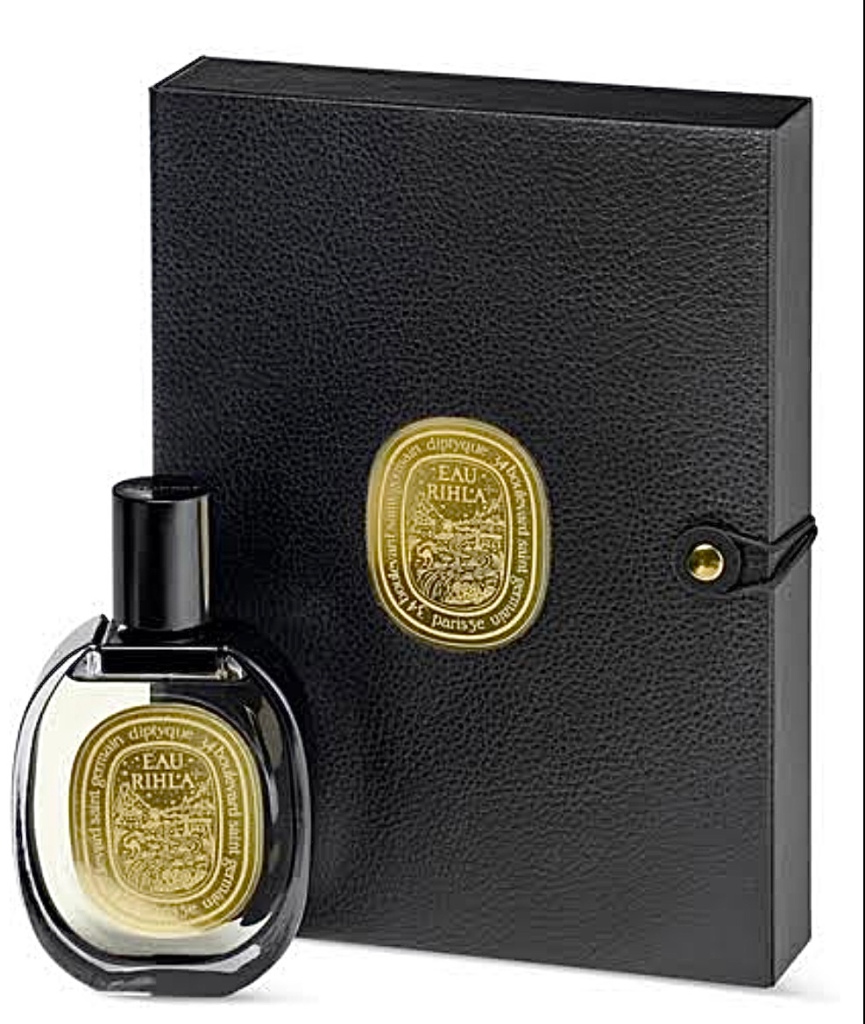
This has just made it to Japan as a ‘new’ release by the perfume house that always has young hip things queueing up at concessions throughout city department stores here to suck up the wares for self pampering or gifts – Diptyque remains very much in vogue.
I prefer the greener Diptyques : L’Ombre Dans L’Eau, Philosokos, Eau De Lierre, Eau Duelle; the aquatics – Huis Clos, Florabellio or else the spicy and weird 70’s ( L’Eau, L’Eau Lente, L’Eau Trois and especially the gloriously spectral Vinaigre), although the only Diptyque that actually thrills me is the insane rasping wisteria sambac hysterical floral Olene. Yes – I need a new bottle of that.
I don’t really do their musky inbetween type beige perfumes like Fleurs De Peau or Eau Papier, a mid musk that eventually ruins their otherwise nice woody patchouli, Tempo as well, and a general category – thicker, woodier, Tam Dao and Oud Palao included, in which I would probably place this stronger eau de parfum ( there is a biscuitiness I don’t enjoy in some Diptyque perfumes, like cookies that have been left far too long in a jar).
That said, Rihla is an exceptionally smooth oud leather vanilla – effortlessly blended – with a dense cedar wood heart and a radiating undertone of perfectly balanced raspberry that gives it a soft friendliness not present, say, in the most famous cuirish framboise, Tom Ford Tuscan Leather. The hookah red fruit note reminds me a little of Givenchy Hot Couture’s raspberry pipe tobacco finish, which I always had a bit of a soft spot for. It is a stylish, wearable leather – not for me- but I can appreciate Fabrice Pellegrin’s craftmanship. A ‘slow’ leather, done Diptyqueishly.
There is often something very moving for me about a real profusion of flowers. The cascades of wisteria at flower parks in Japan, the banks of cherry blossom along city rivers, rose gardens in the English dusk. But all of these places are public: made for picnicking and photographing with other people. We go to them with the explicit purpose of immersing ourselves in their scented presence as a specific day out – busloads of tourists go off to visit the tulips or the fields of lavender in Hokkaido : sometimes the very ‘Event Flower’ nature of floral abundance can take something away from their pleasure. Sometimes you want them all just for yourself.
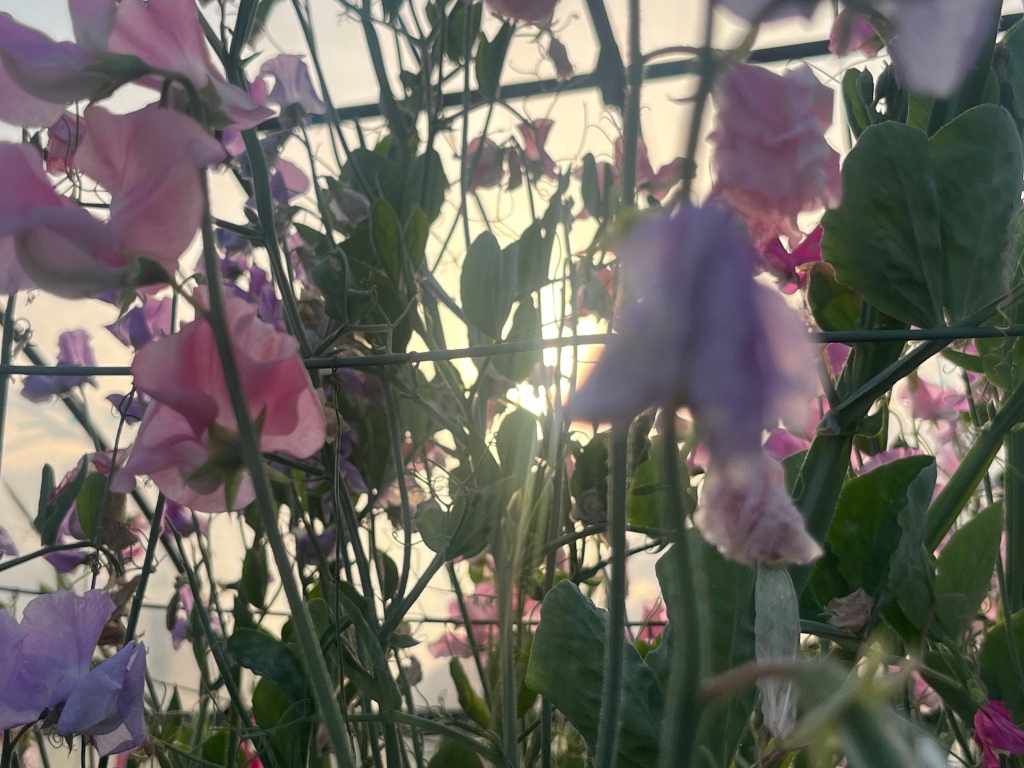
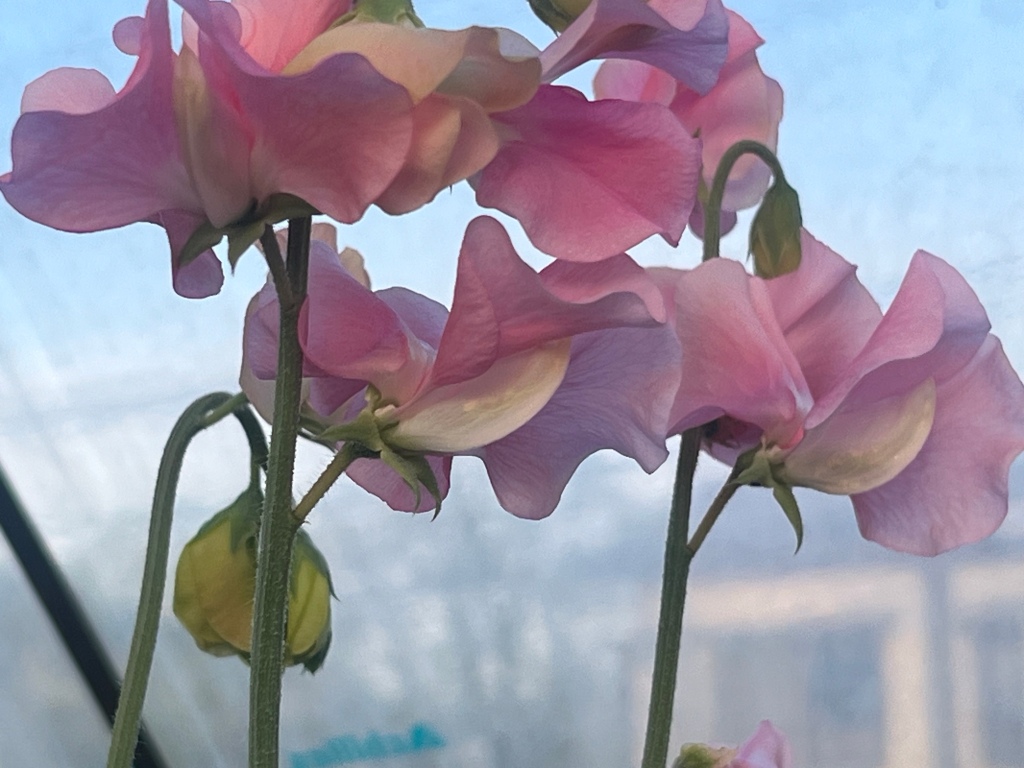
Which is what happened on Saturday. And with sweet peas….flowers I cherish for some reason but which I have never seen in plurality – only a few trailing in my childhood garden or as part of a posey – until we happened to stumble upon a row of greenhouses that were packed to the rafters with them in shades of every pink through purple to blueish mauve with the most remarkably rich perfume that made me well up even when just smelling it through the glass.
We had just been to a vintage furniture shop in the middle of nowhere, a sunny, balmy afternoon, and were walking back past the Samukawa shrine to Miyama station when I spotted the Sweet Pea Farm, the flowers’ names posted in katakana outside on a wooden board – ‘Sweet Peas For Sale’.
There didn’t seem to be anybody there, the office in shambles with bunches of freesias, snapdragons and the pease left randomly on the floor with semi-cut bits of old ribbons and shears. Drawn in by the scent, which was rich and deep, even if I was trespassing I knew I could feign gaijin ignorance and get away with it so before I knew it I had found an opening to the first glasshouse and gone ungingerly inside.
My goodness. It was like being in a John Singer Sergeant painting. A fairy’s dream. The scent, the colour, as the exquisite light filtered down through the slats onto the flowers felt extravagantly beautiful and I felt unanchored. I saw the old lady, who was obviously hard of hearing, as she hadn’t heard us – nor seen us because of the sheer volume of sweet peas everywhere – gathering some fresh flowers, and I knew I wanted some that had just been picked rather than a bouquet that had been lying around on the floor. She noticed us, but didn’t start, or panic, as could easily happen if you suddenly found two strangers uninvited in your flower farm; she just smiled. I oneirically drifted a while longer through the space, taking deep breaths of the scent, which truly was like the oiled extrait of Caron’s original Pois De Senteur De Chez Moi I once had the fortune to receive in the post courtesy of the duchess of vintage perfume, Brielle, we then bought a couple of bunches from the lady, as well as some small turnips she had grown there in other soil, and went on our way. Wrapped in plastic, the flowers wilted, their freshness dissipating by the minute – they are now in the room I am writing this and the scent is way past their best. But I will never forget the sheer captivation of coming across that place so unexpectedly ; neither the vision, the atmosphere, nor the smell. It was pure magic.
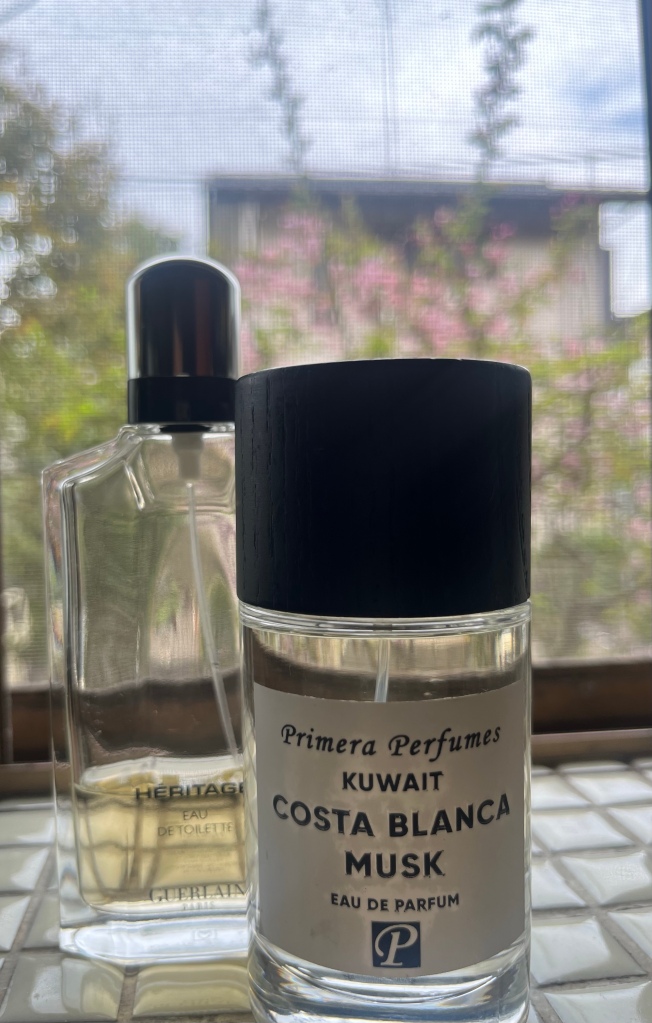
There is nothing connecting these two perfumes aside from the fact that we wore them on Saturday night. The Guerlain – a peppery lavender amber – that I found retrograde when it was released and came to love, was just the right thing for a balmy then chilly evening on the water. D has taken a shine to this perfume from Kuwait – rose, tea, ‘patchouli fruit’ and a loukhoumish musk – mid toned, long lasting, fresh and aromatic – and I rather like it on him : its pinkness was perfect for the cherry blossom.
🌸
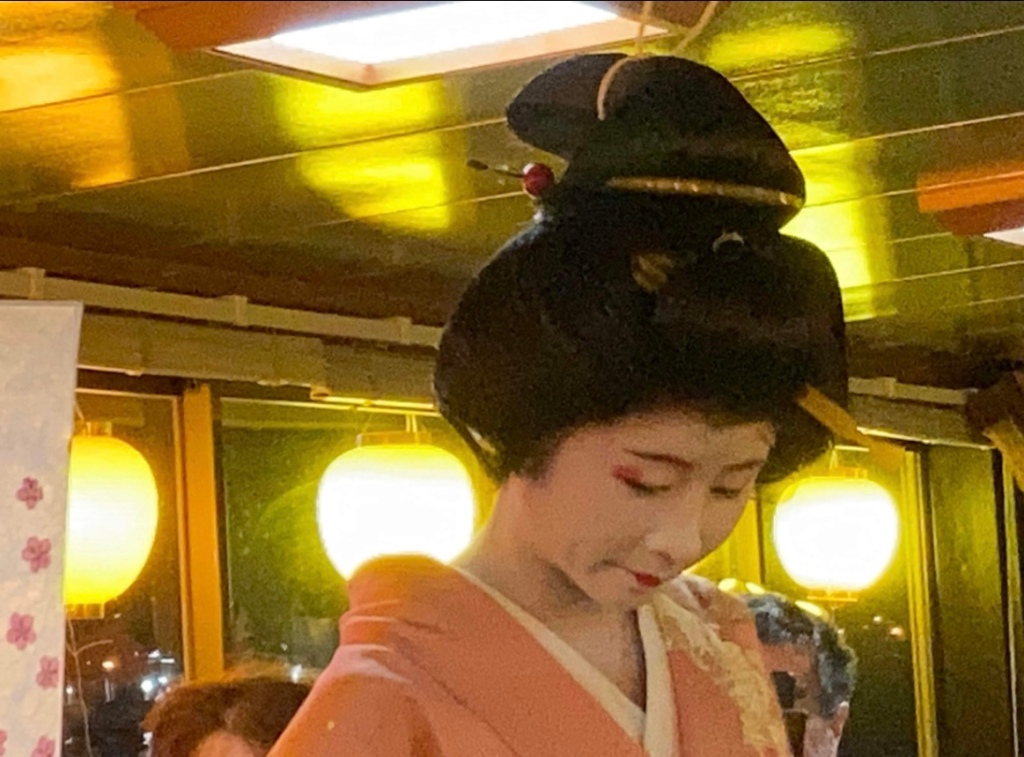
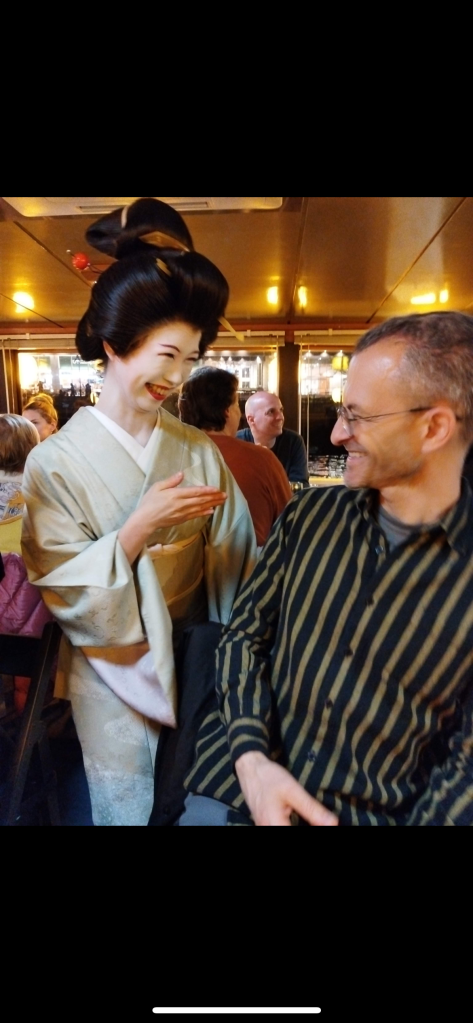
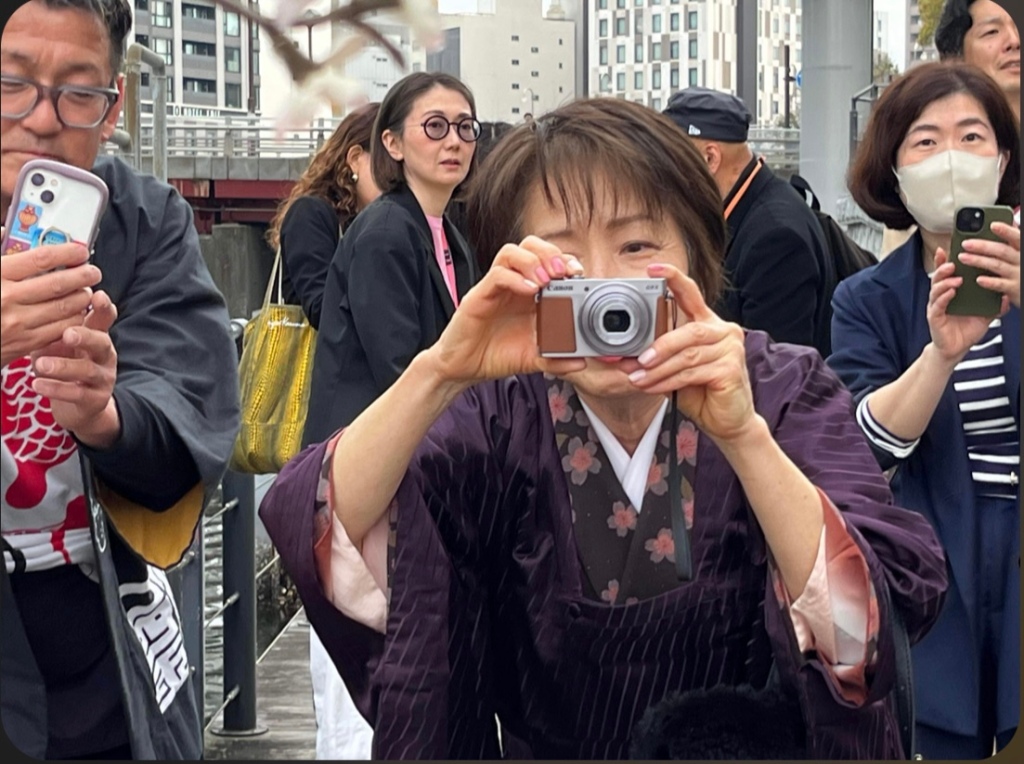
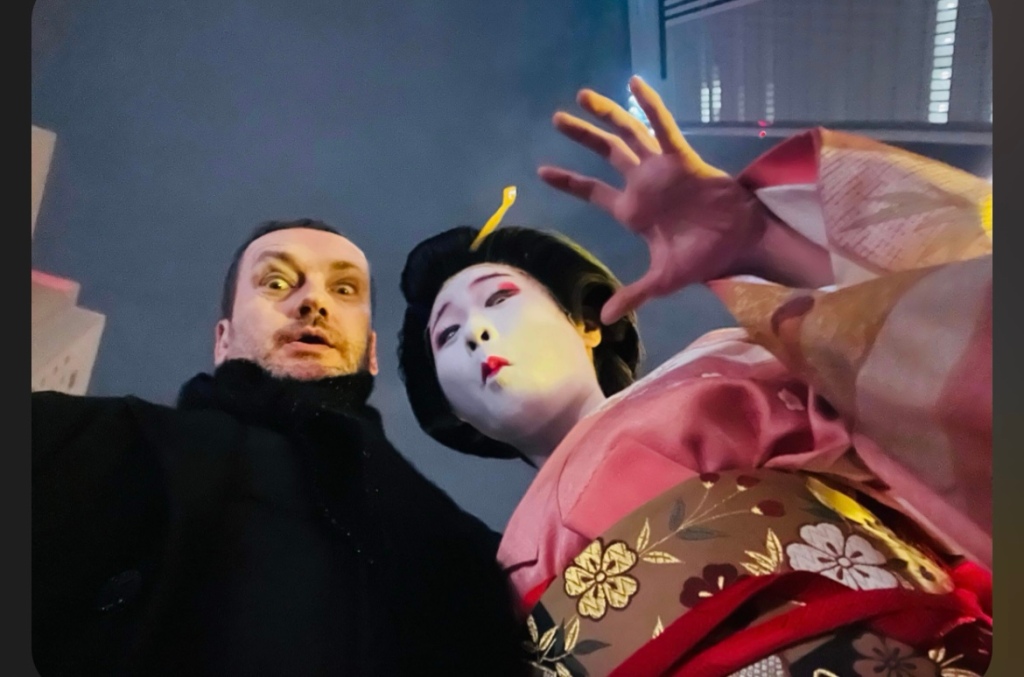
Which we didn’t see that much of actually because it was too cold to go out on the deck, and I was enjoying watching the trainee geisha, or maiko, doing their thing. They smelled of powder and delicately scented hair oil for their elaborate head pieces ( you couldn’t exactly call it ‘hair’): while dignified and with a definite presence – geisha are actually a lot rarer than you might imagine; my friend Setsuko (in kimono) had never met one before – they struck me as being charming , very talented – and just a little bit naughty.


















 The Black Narcissus