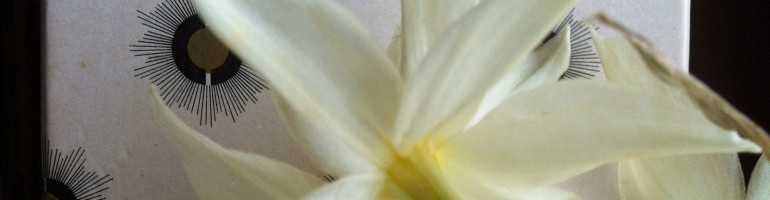
THE NEW SUMMER FLOWERS: A LA ROSE by MAISON KURKDJIAN (20I4) + L’ISLE AU THE by ANNICK GOUTAL (20I5)

tumblr_ndy3jjVLSf1r9nn0xo1_250

I am a big wearer of flowers, always on the lookout for new varieties of beguiling fresh florals, particularly come the summer months, when the jasmines, tuberoses, frangipanis and gardenias come into play, though I can be equally content with some blue-freshing hyacinths, carnations, or the right kind of rose. In recent commercial fragrance however, roses have been maniacally overdone in the most prissy, prudish and synthetic manner imaginable and I have come to almost hate the note: that sewn-up, more hygienic-than-thou aspect as you pass them on the street,  a note of irritation; woman as factory-machined item – bottled and pink, choreographed with a cream, plastic bow.

Sometimes I yearn for more exuding roses: powdered, glossy, but with undercushioned nuances. We were in Shibuya the other night (having missed the last train: we slept on the steps of Bunkamura for a while and wandered the streets like nightcrawlers until the first train), but there were some girls up ahead on the pavement in their heels, and one of them was wearing a rose that was familiar, but which I couldn’t pinpoint, and it changed the midnight air beautifully: lending a satin swagger and flirtatious uplift that I had been craving in my nose brain. I was inhaling greedily as we followed them down the street.

Yes: why not sucker punch your perfume (especially on a Japanese girl, quite unusual), rather than this pseudo demure that pollutes our cities?: these hideous red belts of chastity that come across like olfactory interdictions from the religious police. Be. Clean. Smell. Fresh. Like a rose that has never been. Plucked.

This is all perhaps a strange opening for a rose review that isn’t what I am describing here:  A La Rose is something of a compromise between the two, but at the very least, smelling A La Rose yesterday I didn’t feel sick as I usually do these days with the endless stuck up posies of chemical rosies. In fact I thought, mmmmclever….

A Japanese only release, Kurkdjian has here found a way to stride the river of prim and sensual and create a rose perfume that is rosy (it certainly is very rosy), but without that pink pepper / ‘peony’, nose-nauseous bllieeiruruugggh that the majority of ‘rose’ perfumes currently evince : there is a freshness and a softness but as though through the billowing bottomness of glass. Damascus rose and Turkish rose absolute are citrified and violetted, but only gently, and there is a rougeness that blends naturally with the cedarwood musks of the base. It is one of those perfumes I would never wear (it is still a little bit straitjacketing for me, this style), but which I nevertheless distinctly thought nice on first sniff; a rose that smells urbane but light-hearted; effortless yet thought-out. I can imagine it being quite a big hit here among the Tokyo cognoscenti.

I had actually gone into Takashimaya though, pre-work, to smell L’Isle Au Thé, the new release by Annick Goutal that has had great reviews on several sites, and whose imagery caught my fancy: the island of Jeju in South Korea, and its tea, and its flowers, and I very much liked the idea of a mandarin osmanthus revivifiying summer spritz that might get me through the final two months of term (eleven weeks down, still eight weeks to go). I adore the smell of a well done orange perfume, or mandarin, or tangerine, or any citrus scent if it is handled in an imaginative way, and had imagined an eye-opening citrus perfume with green tea accents; a sly lick of osmanthus.

I immediately liked the perfume, as I had anticipated I would: I think Annick Goutal is one of those houses whose perfumes smell joyous. To me they smell unfettered and alive and devoid of crass commercialism though managing to smell current. Unbased on gimmickry and boilerplate fashion tags they are just bottles of beautifully made scent: romantic: well crafted, and pleasing. This new release is another successful addition to a line that encompasses all flowers done in the French contemporary style yet with classicist leanings: a musc softened green tea neroli with mandarin accents: lovely, but for me a touch too heavy on the orange blossom: I have already fallen in love with the brand’s sharper and more uncompromising pure Néroli, as I wrote the other day. My immediate impression was that L’Isle au thé was like a combination of that perfume, with an underlying dose of Bulgari’s Eau Parfumée Au The Vert (which I have and wear on occasion), but which smells a touch nineties to me in a way, a bit of a throwback. However, the osmanthus touch is very appealing, and so is the overall execution of the perfume, and I would certainly keep an eye out for a discounted bottle as I can imagine this being delightful when you are in the exact right mood. As a full priced bottle though it doesn’t quite reach the mark. I already have my cabinets full of more exciting, sense-gratifying treasures.

6 Comments

Filed under Flowers

BEAUTIFUL POISONS: FOUR PERFUMES FROM THE EARLY 90’s : Allure, Cabotine, Dolce & Gabbana Pour Femme + Tendre Poison

BEAUTIFUL POISONS: FOUR PERFUMES FROM THE EARLY 90’s : Allure, Cabotine, Dolce & Gabbana Pour Femme + Tendre Poison.

Leave a comment

Filed under Flowers

BOOBS………………….Le N° 9 by CADOLLE (1925)

BOOBS………………….Le N° 9 by CADOLLE (1925).

Leave a comment

Filed under Flowers

TWO WILDLY DIFFERING ORANGE BLOSSOMS : : APOM HOMME by MAISON KURKDJIAN (2009 ) + NEROLI by ANNICK GOUTAL (20I3)

75

One of the joys of the Tokyo and Yokohama thrift shops is that you just never know. While you can go into them week after week, month after month and there not be anything you really want – just the usual uninteresting suspects – suddenly there can be a windfall of perfumes; not just vintage beauties, but thrown-out niche: the kind of perfumes you might never consider buying at full price, but which presented to you as a cache of vastly reduced bargains in the glass cabinet of a thrift shop you think why not: go on then: they might help me to upgrade my repertoire.

And the other day, at ‘Crystal’, a very hit and miss place, I came across a cabinet of Goutals and Penhaligons and L’Artisans and Maison Kurkdjian (something I have never seen reduced before: all these expensive brands found exclusively in the snazzier Tokyo department stores at vastly inflated prices, so what the hell was going on?), snapping up Tea For Two and Opus I860 for Duncan, and APOM Homme and Néroli for me, also debating over Mandragore Pourpre (always intriguing – I now regret not buying that one as well), and Goutal’s peculiarly acrid Vanille Exquise.


I would probably never even have given either of these perfumes more than a cursory sniff at Isetan if I had come across them:  anything with ‘pour homme’ in the title immediately puts me off as I anticipate gender clichés that don’t fit the image I have of myself (I had definitely liked the feminine equivalent though and was very disappointed it wasn’t that one instead when I first saw the bottle), and in any case colognes, and neroli in particular, are not something I necessarily go for as I don’t think I can really carry off orange blossom.


Although I am drawn to the smell of these flowers in nature and am definitely an acolyte of the essential oil (for skin preservation purposes), in fragrance it doesn’t quite work for me. I was never a fan of the classic cologne formula (the petitgrain, rosemary and musk added to the neroli), and there are very few scents of this type I can imagine wearing on myself. I quite like Divin Enfant, Castile and Dilmun, – all padded, creamily softened nerolis – but they are a bit pampered and cotton woolish for my own tastes. The sharper, more vivid perfumes of the type, Lutens’ Fleurs D’Oranger, Fragile, or Atelier Cologne’s Grand Néroli, are glinting extravagances that I can appreciate but not wear persuasively, and until discovering this rendition by Goutal, I would never have seen myself leaving the house in this flower’s leafy, potent gaze.


But Annick Goutal’s Néroli has the green rasp of bitter orange leaves; the snap of a twig and the fresh floral white breath of natural orange blossoms. The full bower; a replenishingly brisk, yet deeply felt neroli that is refreshing in its simplicity yet impressive in its true to lifeness. More than a portrait of orange blossom flowers it is an enactment: a reappearance, almost, of the living flowers on each spray: it is more true than any other neroli I know, yet simultaneously more pleasing than the neural harshness of the pure essential oil. Although as with all colognes the zinginess inevitably fades, this is still quite lovely throughout its duration: cool, yet warm; removed, yet romantic; enveloping, yet subtle. It is excellent, and I am very glad I bought it.

*

*

The almost diametrically opposed APOM, a curious and original scent by Maison Kurkdijian, is woozy, sexed and direct, centred on the same smell of orange blossom as the Goutal – if less sharply defined – but where the Néroli is all concerned with nature and the sweet outdoors, APOM (‘A Piece Of Me’), is all about urbanity. ‘Lifestyle.’ Signatures. Where the Annick Goutal delights and uplifts, APOM disturbs; a prowlingly plasticky leather and cedared amber base (erotic); steam-ironed synthetics in the top accord that reek of freshly pressed, exclusive clothes in a penthouse city apartment.


*

*

APOM’s creator, Francis Kurkdjian, is in many ways a modern genius. Unlike the vast majority of niche perfumes I smell, his creations are indelibly created with character. Unlike Bertrand Duchaufour and his (often pointlessly) overegged puddings, brimming with details but for me at least difficult to digest, FK seems to pare down his formulae to the essentials, yet avoids the pale minimalism of an Ellena or a Giacobetti, rendering them full-cheeked; replete, and immediately memorable. It often seems to me in fact that the best new scents are still somehow instantly familiar and recognizable in some way that does not detract from their innovation. Jean Paul Gaultier’s Le Male, a Kurkdjiian creation, had echoes of earlier perfumes but still packed an immediate punch as a zeitgeisty fragrance that became a mass seller. APOM, a perfume I am not sure I entirely like (in fact in some ways I could even say that it repels me; I felt very strange indeed wearing it out in public on the day that I did as it was like being a different person; guised in a costume that was alien, unholy, yet fascinating: I was unable to stop constantly inhaling myself), is nevertheless hotly distinctive and commercial. This scent is pointed; and blunting. Sexy. As I came out of the cinema, alone (“The Tribe”, a brilliant, almost silent film acted entirely in sign language without subtitles), feeling stunned and quite dislocated by what was a very singular cinematic experience, the smell that was rising up from my clothes only added to the disorientating feeling of being suspended in dense, thick time; where the outside reality felt uncanny and heightened – a man cycling slowly by a canal; the mist covered waters, the memories of the beautiful but very violent film rising in splintered vivid  fragments in my scentless brain.


‘A Piece Of Me’ thus feels like a very apt name for the perfume. A tattoo; a memento of someone left on a trace of the air in a room. It is intensely modern, of the times, but fully realized, as though it had willed itself from ether into existence….


The-Tribe-Film-01

Later on in that evening, I met up with Duncan and a group of friends who had just done a ten hour marathon charity walk for Medicins Sans Frontières around the Yamanote Line in Tokyo ( I wasn’t able to take part because of my knee), but in any case, rather than feeling lonely or left out as I might have done at another time, on that particular day I was revelling in that particular kind of solitude when existence feels glassy, liquid, double distilled, when you have entered it and own it from the inside. And as the pungent, insistent base tones of APOM began to fade on my skin, I then found that the linking note – the orange blossom, the neroli – meant that despite their great differences in conception and execution, I could also spritz on some Goutal – revivifying, natural; fresh, more innocent – just before meeting everyone at the station

18 Comments

Filed under Myroslav Slaboshpytskiy's The Tribe, Neroli, Orange Blossom

Invisible jasmine: WHERE WE ARE THERE IS NO HERE by CB I Hate Perfume (2012)

Invisible jasmine: WHERE WE ARE THERE IS NO HERE by CB I Hate Perfume (2012).


WHERE I AM?


I HAVE NO IDEA

6 Comments

Filed under Flowers

DO YOU REALLY WANT TO HURT ME: THE NEW ROMANTICS IN PERFUME (PART 1) : POUR FEMME by ARMANI (1982) + CLANDESTINE by GUY LAROCHE (1985)

DO YOU REALLY WANT TO HURT ME: THE NEW ROMANTICS IN PERFUME (PART 1) : POUR FEMME by ARMANI (1982) + CLANDESTINE by GUY LAROCHE (1985).

Leave a comment

Filed under Flowers

CHAMADE by GUERLAIN (1969)

‘You gave me hyacinths first a year ago;

They called me the hyacinth girl.’

tumblr_nl5dgrYlab1u5ndyfo1_500

The appearance of The Hyacinth Girl in T.S Eliot’s The Wasteland is probably the most memorable part of the poem the for the budding and swooning flower acolyte, and many a romantic seventeen year old English student is probably sighing and dreaming on discovering her as I write this ( I know that I most certainly was; that age when I was blooming into  consciousness).

The flowers in the first part of the work, ‘The Burial Of The Dead’ (lilacs, hyacinths) speak of desire, death, and romantic loss (the cruelty of spring), and Chamade, Jean Paul Guerlain’s great masterpiece of 1969  – inspired by a tragic love story by Francoise Sagan, ‘La Chamade’ – reflects this: it is an exceptionally tender, sensitive perfume;  a perfume to own just for its own beauty even if you don’t wear it yourself, just to apply to the skin like a dream-touched portal to another sphere.

There is an inherent mystery under this scent’s outwardly romantic surface, a half-eyed melancholy brimming and swirling with sensuality. Beginning with a verdant overture of Persian galbanum and spring green leaves, this is followed by an emotion-filled, rich-bodied hyacinth accord cushioned and clasped with the classic Guerlain mastery.
But although the initial departure of Chamade is green and hyacinthine, slowly, gradually, a soft floral heart develops in the perfume’s central, of rose, jasmine, lilac and clove, leading, eventually to a gorgeously lingering balsamic and vanilla powdered heart that is one of the very finest dry downs in the history of perfumery. Resolutely sexual despite its outward temerity (Chamade means ‘moment of surrender’ or ‘the rapid beating of the heart’), extremely feminine, poetic, fully realized, and one of the very best perfumes I have ever had the fortune to be acquainted with, the treasured vintage parfum that I keep near my bed is one of my most prized possessions.

28 Comments

Filed under Flowers

THE DEEP, HAIRY ARMPIT OF LOVE : UNGARO POUR HOMME by UNGARO (1991)

THE DEEP, HAIRY ARMPIT OF LOVE : UNGARO POUR HOMME by UNGARO (1991).

4 Comments

Filed under Flowers

DOWN, BY THE SEA: : : SEL MARIN by HEELEY (2008) + AURA MARIS by LORENZO VILLORESI (20I2)

G593-10

Aura Maris is a Florentine, niche remake of the melancholy Eau De Rochas – a depressive citrus of Mediterranean shrubs, flowers, and waves. It is an unremarkable, but quietly attentive and well crafted scent for introversion and solitude. The saline cliffs. The deserted beach. The open water. Private, unintrusive; intelligent, sad, and genderless. Sel Marin is a more pronounced marine perfume, yet repressed; an aspect that creates tension. Iodine, antiseptic opening notes show to a dour yet sensuous smell – masculine and insistent – with lemon, Sicilian bergamot, oceanics, sea algae, and a taut cedar and vetiver base. Despite its rudimentary execution, the salt spray stays close here. tumblr_nakndje45Q1rtynt1o8_1280

7 Comments

Filed under marine, the loneliness of the sea

I WAS ABDUCTED BY A GIANT LYCHEE SPACESHIP: CHAMPAGNE by YVES SAINT LAURENT (1991)

I WAS ABDUCTED BY A GIANT LYCHEE SPACESHIP: CHAMPAGNE by YVES SAINT LAURENT (1991).

Leave a comment

Filed under Flowers