but it is highly amusing to me that he has suddenly started taken to wearing Givenchy Hot Couture.
And it smells REALLY good
but it is highly amusing to me that he has suddenly started taken to wearing Givenchy Hot Couture.
And it smells REALLY good
Filed under Flowers


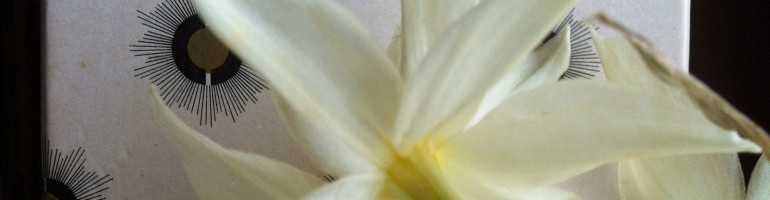
The narcissus flower is nature’s narcotic. Worshipped by the ancients, it is an intoxicating, overpowering scent in concentration and in excess can be deleterious to the health, the bulb of the flower, if ingested, lethal.
Narcissus absolute is therefore usually used in moderate quantities, for a certain carnal luminosity: for added, troubling intrigue in fragranced blends, but rarely seems to star. Caron, however, once a fearless house of perfume, had the temerity to create, in 1927, a scent of these white flowers at their most potent (it is only available in extrait): a perfume dominated in its head notes by an intense concentration of narcissus, orange blossom, neroli, petitgrain, bitter orange, linden, and iris. While often said to be a ‘lighter’ more polite, version of Narcisse Noir, I have never personally understood this, as I own the extrait, an unlikely perfume for me in truth, that I bought from the Caron boutique on the Avenue Montaigne in Paris many years ago, having spent an entire afternoon with Helen testing all the urn perfumes in the shop and trying, desperately, to decide which one to buy. Probably I should have bought Poivre, or Farnesiana, or even Rose, but somehow, at that time, for some reason, I kept being drawn back inexorably to The White Narcissus.
To me personally, its exotic, sultry and erotic intimations, its dry, animalic base of sandalwood and musk, all make it raw, uncompromising; resolutely sensual; unwestern. While Narcisse Noir works so well because of the sullen, carnal tensions between the darkness of the base and the glowering, narcisssus’d orange blossoms in the head, the less shadowed, boisé anchoring in Narcisse Blanc almost make the flowers more torrid, more feral as they have more room in the blend to breathe and emote.


Narcisse Blanc is very difficult for me to wear, the strength of the flowers bursting from their little flacon, for me almost headache inducing in their glinting, warm sweet headiness. It is a perfume for very specific timess, therefore, one I try to get Duncan to wear on occasion ( it smells curiously sexy, like an Indian prince), or dab on once in a while on hot summer evenings while sitting on the balcony. But never have I, as with a fair proportion of my perfumes, actually worn this perfume outside the house. Maybe one day I might. Perhaps on a once in a lifetime trip to the Taj Majal.

Filed under Flowers

GAROFANO/ SANTA MARIA NOVELLA
A brilliant pink Spring Sunday in Japan, cherry blossom season.
After a bath, a sleep on the sofa, and a couple of glasses of Zubrowka vodka, I put some Santa Maria Novella on and left the house, emerging and blinking blearily into a windy, sunny afternoon: a woozy, technicolour dreamworld of peach and cherry blossom blowing in the breeze like drifting, petalled snow in a gentle reverie of scent, as carnations seemed to bloom from my skin, and the sky was open and bright blue above.
With this king of carnation perfumes (and to me, this really is king), startlingly real apparitions of pale, full, pink carnations appear in all their lusciousness and vitality from the tiniest drop on the skin, while the cloviness of the flowers seems to grow only more intense the more time passes, never letting up in strength and aroma the entire day. The perfume is, quite simply, brilliantly alive, and for anyone like me who buried their face in the flowers as a child in the garden, inhaling deeply their rich, springtime scented petals, this is the essential carnation experience.


BELLODGIA/ CARON
A royalty of carnations.
Taking its name from an Italian lakeside town where fields of wild carnations grow, Bellodgia (1927) is a rich, well-loved carnation of beauty – a tapestry. Where Santa Maria Novella focuses on the pale freshness of carnation petals and their penetrating spice, Bellodgia envelops more initially trembling, languorous carnations in a banquet of jasmine and violet-scented roses that is beautifully, and classically, controlled. Only after about forty minutes does the familiar cloviness of the carnation then reappear, underscored by a bed of sandal, vanilla, and creamy, old-fashioned musks. The effect is classical, tender – dripping, practically, with emotion – a carnation for the romantic.
MALMAISON/ FLORIS
Malmaison, a scent popular since its creation in the nineteenth century and a favourite of Oscar Wilde (who actually dyed his carnations green every morning to keep them new), is lighter, brighter, and spicier than Bellodgia, with top notes of ylang and lemon; more sly, flirtatious, shrewd. A perfect balance of fresh floral notes, spice (its clove is very piquant), woods and musk, it is an ostentatious scent that takes us back to the Edwardian age when Malmaison carnations and asparagus ferns graced glass vases as the drawing room centerpieces of grandballrooms : the gathering points of contemporary Society.


Carnations at their most vivacious.
GAROFANO/ LORENZO VILLORESI
Lorenzo Villoresi’s creations are characterized by vivid flourishes that have inspired quite a wild following. The scents certainly turn heads, and one night on an outing to a restaurant with my sister I decided, perhaps unwisely, to try out his carnation scent, Garofano.
This was perhaps not the most subtle choice for a place where people were eating – it is one hell of a fireworks floral – though I have to say that I myself rather selfishly enjoyed it: a carnation-based blend that is fresh, opulent, and spicy, with floral edges of rose and geranium: but not sweet; superbly balanced as it is with elements of black pepper and cinnamon. The formula eventually (quite a bit later), calms to a soft, sultry musk accord of woods and vanilla.
Feeling heady and extroverted, however, and in fine spirits that evening, I applied a great dose of the scent just before we entered the place, for maximum impact, and as we sat down, a waitress, on her way to another table, suddenly swung round with an
‘Oh-my God-what-are-you-wearing-that-is-gorgeous, amazing……is-it-Habit-Rouge???!’
lunging straight for my neck even as my sister was gagging to herself and moving back her chair.
Neil, she said, do you HAVE to ?
As carnation perfumes go, then, Villoresi could therefore polarize. Of those here, Villoresi’s carnation is most akin to the fresh naturalness of the Santa Maria Novella’s, though perhaps less magical and fairy tale-like; more expansive; masculine, a touch drier. It is a very good addition to the type, however, and recommended if you want something pink, natural; assertive.

OEILLET SAUVAGE/ L’ARTISAN PARFUMEUR
If the fanged carnations of the plush exuberant, Italian variety are too scary for you (‘garafono’, with the stress on the second ‘a’,was the first word in my Italian language textbook, the one we were required to read before going to university, and is thus a very endearing word for me – a gorgeous substitute for ‘carnation’ and my Italian department friends), but you also you find the wilting, Grand Duchess musks of Bellodgia a bit too much, then perhaps you might prefer a subtler, woodland take – Anne Flipo’s more delicate story: a tale of wild carnations growing peacefully by a stream; spice subdued; the petals drinking, quietly, obliviously, in the delicate, June time sylvan air.
DIANTHUS/ ETRO
Another possibility, if you hanker for a dewy, petal-fresh carnation for spring or Mother’s Day without all the pomp, is Dianthus (from the original latin name for carnation): a lightly spiced, modern carnation with top notes of ginger and pepper, but given a tender, powder transparency with light rose, musk and vanilla. It is a subtle and convincing carnation that I think works well as a stylish, but introverted carnation alternative.


SACREBLEU/ PARFUMS DE NICOLAI
A more sexual proposition.
An orange, smart carnation with a fruity beginning – mandarin, raspberry, apricot – an almost salty, musk/sandalwood, and a tuberose/cinnamon/ incense heart that works well as an upfront power-lunch perfume in the vein of Giorgio’s Red – surely one of the ultimate blockbuster florals – though Sacrebleu is more subtle and comforting (it is French).
The paint in Red is thick, acrylic, and seven coats thick. In Sacrebleu it is freshly on, a more subtle shade, and only one coat.

GAROFANO/ BORSARI
Darker blooms: tea with Mussolini.
An Italian carnation from 1930, compact and boxy with a cinnamon, rose, black pepper and clove twist, this gorgeous carnation scent has a suave, knowing chic not seen elsewhere in the canon: an exciting perfume for an elegant woman in black.
Only available as one of the miniatures in the classic Borsari sets.

METALLICA/ GUERLAIN
The idea of a thrash metal band being bothered to sue – and win – against the house of Guerlain is surely hilarious. I remember being at a Guerlain counter in Birmingham where the limited edition Metallica had just emerged, presented in a wonderful bee-encrusted silver flacon that I desperately wanted (these are now heavily coveted collectors’ items and I should have just robbed someone on the street to get one). The scent I wasn’t entirely sure about at the time as a perfume to wear myself, with its odd, metallic beginning, though the sales lady, who had been wearing it all day, almost convinced me with the final accord. Where many carnations end in non-descript dusk-pink fashion, the drydown of Metalys is truly beautiful; a smoky, haunting, powdery vanilla/tonka/iris that holds on your skin in the way that only the best Guerlains can.
But what of the rest of the perfume? Well, for a start, it was no longer Metallica, but Metalys. The band didn’t want their head banging ferocity emasculated by a pouffy vanilla carnation, and so the lawyers won ( like Yves Saint Laurent’s Champagne, it was given a forced disappearance, ‘taken out’….)
Essentially, Metalys/ Metallica is an exquisite, but quite difficult, reinterpretation of carnation that cannot be judged on only one inhalation. This perfume requires time: an ephemeral, emotive, almost ghostly orange blossom carnation, yet with all the usual beautifully eccentric Guerlain trimmings.
SOIE ROUGE/ MAITRE PARFUMEUR ET GANTIER (1988)
The classic carnation mould is hard to break (usually some variation on rose, carnation and clove) and that’s what we almost invariably want. It is still very refreshing, nevertheless, to see it done differently on occasion, and Soie Rouge is perhaps the most original take on these flowers I know.
This perfume, by the much underappreciated Maitre Parfumeur et Gantier, has a bright, unexpected loveliness: the smell of optimism; of a brand new day, a soapy, clean carnation overlaid with an almost decadent accord of (over)ripe fruit: pineapple, transparent apricot, and a gentle powdery drydown of heliotrope effectively communicating the silk of the name. It is all airy, and joyous, and more than a little strange.

CARNATION/ COMME DES GARCONS RED SERIES
Comme Des Garçons, with their Red Series carnation, refreshingly deny us the powdery heritage of carnations, rocketing them up into spicy red stratospheres that are fresh and enticing, bestowing us with a wholly modern, zinging scent that works rather nicely. With notes of red carnation, red pepper and cloves (and a good dose of fresh modern rose) what you have here is a clean, spiced carnation flower without baggage.
* * * * * *
For yet more carnation perfumes see also my reviews of Serge Lutens Vitriol d’Oeillet, another beautiful and underrated carnation, plus the enigmatic Diamond Waters & Golconda by JAR.
And, incidentally, are there any other really good carnation scents that you would like to recommend us carnation lovers?
Filed under Flowers


I have no idea what the meaning of life is, but I do know that while half the world is starving, a significant proportion of the richer quotient is wandering around department stores and bijou little fashion concessions just looking for something to buy, to spend some of that hard earned money else what’s the point? A naughty, unneeded item of luxury on the way home just to pamper; something to buy for the sake of buying, just……….because.
Nowhere is this more true than Japan, where young people live rent-free with their parents until their mid-twenties or thirties and thus have more disposable income than anyone else on the planet; money to be spent on clothes, accessories, sundries, cute nonsense, games, or prestigious European imports: food, drinks, sweets, gums; purchased, wrapped up, ribboned immaculately, in sweet little designer-printed paper fukuro.
Tuesday evening, bored, with time to kill before getting on the night bus home, I myself understood this impulse: I had just been paid and I just wanted to buy something, and so I squandered five hundred yen on a tin of unneeded bonbons I didn’t really want. Finding myself in Seijo Ishii, beloved Japanese purveyor of fine things of that nobody needs, I discovered myself wandering the luxurious aisles with the other post-work consumers, espying on one of the shelves some violet-perfumed confectionery – Les Anis De Flavigny, Violette, véritables anis de l’abbaye de Flavigny to be precise – which I got for the journey home, curious as to how the white, sugar-coated spheres might taste; if I could somehow end up perfuming the dull environs of the bus atmosphere with my silent, violet mouth ( they apparently contain actual violet flower extract, whatever that is, which, as I looked over the tin in the comfort of my seat, I somehow found unusual, and vaguely fascinating).
And how did they taste? Weird. A brief moment of innocuous hard-shelled sugar: then, an attack of strong-tasting, perfumey violet – tanged, almost acerbic and rich, like perfume, like putting your mouth down in the bath water and sucking up some of the bath oil.
A sensation that only lasts a quarter of a minute or so, though, before a more bland, blanc sugariness comes back onto your tastebuds giving a more anisic, softer core that you can, eventually, after three minutes of sucking or so, begin to crunch down on; your tongue lolling in violet sugar, your brain temporarily lulled, further comatosed.
Woe-betide you if you fail to read the fine print though: ‘DO NOT BITE’ they warn, like a hidden edict from Alice In Wonderland: or your teeth, if the enamel has not already begun melting off from all the sugar, might crack into fractured pieces upon impact with this hard candy; proffering up your lips, expectantly, to be kissed: liquorous, purple violets, and a magma of hot sugar dripping from your pucker, as splinters of denta-fragments dribble, glacially, from your chin…
Filed under Flowers


A place with nothing but unappealing, cheapo knick-knacks, hideous furniture, second hand electrical devices, bits and bobs, ugly jewellery boxes…..a place I would never even sully your mind with for its intrusion of drab, functional banality, for fear your very eyes would suddenly fester on their stalks.
I suppose we had wandered in because we once got a fake leather sofa from there, because D has an eye for a bargain, and because they had once gotten hold of some coconut incense that for a while I then became vaguely addicted to.
As we were about to leave, my head turned, my synapses connected, my heart lurched, and I let out that familiar OH MY GOD, as my startled orbs alighted, dazzled, on a very cherished sight in a cabinet right in front of the cash register that I had somehow, in my visual boredom, overlooked: a classic, vintage, Guerlain box of extrait.
Dear reader, if you have never had the delight of owning and treasuring one of these black and white dazzling preciousnessess, I urge you now to feast your eyes on the beauty of these boxes, the almost classically Grecian aspect that surely inspired Diptyque in their own design, and which I could just sit and gaze at for hours (the shape of the gold! the lettering! the way the weird inner box, which I have never seen anywhere before, a very sixties/seventies design of silvery rain and green, nature-laden splotches of flora, is hidden, counterintuitively, in terms of design, within).
See, like one on slow motion autopilot, hypnotized, how my hand reaches out intuitively with not even a nanosecond of hesitation, and grasps this treasure firmly, ready to fight off any (non-existent) contenders; expecting, with guzzling excitement, for it it be my beloved Vol De Nuit.
But no: to my bewilderment (how can this be?!!) it is almost even better.
By the very next second my ravaged old brain has understood, magnificently, that this is not Vol De Nuit but CHAMADE.
CHAMADE.
EXTRAIT.


Look at those two words in juxtaposition, words I have never had the luck to see before in all my years of Japanese vintage hunting. Never. So rare, so beautiful.
And cheap as chips.
Yes, how much was it again? Three thousand, six hundred and fifty yen? Twenty one pounds? Thirty five dollars? For a rare, vintage, unopened bottle of possibly the most beautiful perfume ever made?
I do think so, yes. Oh yes, sir, I do.
Bought, bagged and thrust into my coat pockets, I emerge from this shambolic, unlikely contender of a shop, my Sunday quite made, all thoughts of knee pain and work issues banished in an instant by the perfume that rests in my pocket, which I am now lifting to my nose on the street, having carefully, lovingly, set it free from its entrapment, possibly sealed within since it was purchased by someone somehow just too blind to see its beauty.
It uncoils itself, rises up from its liquid, and lets its green, blue, heartbreaking emanations reach my amygdala: ah yes, that’s Chamade alright, in all its Turkish rose glory, more concentrated, intensified; more hyacinthine, more galbanumy, a more direct arrow to the rabid fetishist’s, softeningly perfuming coeur.
The perfume sits in its exquisite box on the table of the Chinese restaurant we end up in, as the D and I while away the afternoon in a leisurely fashion, relaxed and dreamily, and post-bath later I wear it in bed, the room full of the scent of blooming, enamoured hyacinths….

Filed under Flowers
Filed under Flowers

Every scent lover has perfumes that conjure back important events in his or her life, perfumes that can make you wince with emotional remembrance, jolts of pain, or pleasure, that stand like monuments to your past, encapsulating whole periods of your existence: an identity you may not now relate to, but which you know still stands stacked inside your soul like a barely concealed nest of experiential Russian dolls, memories that are merely a cerebral membrane away; that with perfume, smelled once more, can be revived: re-examined.
Although I don’t think of myself as an especially nostalgic person, though I may be deluding myself in that regard having just reread this, I also know that for me, in some ways, the past has always been more important than the future; by which I mean that I have come to have a philosophy of life that very much lives in the now: a full, sensorial experience that when it does become the past, which it obviously always does, is then a life fully lived. You are what you have done before, I believe: we are those years; your past is your oeuvre. We are all different, but for me, those that spend their entire time consumed with plans, working working working for money for the sake of some unnamable future, blinkered to the beauty of the here and now, sometimes end up, ultimately, with a more hollow form of existence: partially blinded to the present, thinking constantly of finances, of the banal concrete realities of material possession and daily life, they end up in a strange state of nothingness, with neither a fulfilling life in the now, nor decent past experiences to look back on when it is all behind them.
And time is always slipping away.
The future, for me, must always be hazy. I have to have something to be looking forward to, always, and a vague idea of the direction I am going in, a six to twelve month plan, but that is enough. I know I could die tomorrow, as we all could, and I just don’t believe that excessive obsession with future plans is worth it. Not for me in any case. And, in relation to this way of thinking, it is possible that my cabinets of perfumes in some ways exist on several existential planes: mostly for the immediate pleasure they give me on a daily basis, with no emotive ties or associations (though I am also aware that some of them will probably be heart-jerkers someday in the future for that very reason: I am very much enjoying this stage in my life and who knows? Perfumes that remind me of my forties could be the ones that kill me the most when I am old, decrepit and on the way out): I am unconsciously making my perfume memories now, all the time, even as we speak…
There are also perfumes that I keep in my collection that remind me of other people but that I would never wear myself; that are almost like a long distance hug, like apparitions momentarily standing before me. Certain family members and friends, and most definitely Duncan, are almost available to me, thus, in liquid form; their essence, or what my brain perceives as their essence (this is what was so devastating about Solaris: the piercing realization that we can never truly know everything about another person, that our understanding of them is always skewed, biased, un-full…), whatever it is, I reach into the cabinet, unstopper a bottle; breathe in, and my loved ones are there, in unbodied, ghostly form, right with me.
Then there are many other scents, of course, that represent me alone. I am in the middle of writing something, actually, about a very disturbing Japanese scent I bought when I first came here to Japan, and that one is almost unbearable for me to smell now as it just brings back – vividly – waves of isolation and depression. And yet I would never get rid of it. It is time, bottled – me at 26. I have to be feeling peculiarly masochistic to sit down with that one, though: and yet the very fact that such strong emotions are possible from the mere inhaling of a bouquet of molecules is intensely thrilling to me: it could almost make me believe in eternity.
Others in my collection, most of my perfumes in fact, merely represent particular episodes in my life as lived thus far. Serge Lutens’ Vitriol D’Oeillet reminds me of certain Christmas a few years ago; my Montales just make me think of a liberating, hot and sexy summer in Berlin. Kouros of me as a young man; Calèche of myself in a particular wistful, Sunday mood; Bal A Versailles parfum as me full stop.
But, strangely, there are two perfumes, not my holy grails, but ones that I love very much nevertheless, that can fit into all the above categories, yet that can transcend thoses boundaries; time and space; and thus have a unique position in my pantheon: Ysatis and Givenchy Gentleman. These, in vintage, unadulterated form (they have both been unacceptably reformulated as I am sure you can imagine) not only represent extremely important events in my life but also were worn by its key figures: the turning point in terms of sexuality; my mother, my father; but also myself. They are also both scents that I can happily wear now, despite their seemingly gendered disparities – I feel perfectly at ease in both, like them equally. There are days when some Ysatis parfum, layered with a coconut scent like Yves Rocher Noix De Coco, are utterly delightful ( I wore buckets of it for some reason the last time I went to get my visa renewed at Yokohama immigration: I’m surprised they even stamped my passport…)
Gentleman I wear when I want to feel manly, together, hairy and assertive : I have a collection of vintage bottles that I have come across at flea markets, and although it is not a scent I wear that often, I need to always have some in my collection. When I think about it, there aren’t any other scents I own that have this quality, that exist on the level of symbol and representation and strange captivations of youth, gender, and sexuality, but which I can also still wear quite happily now as beautifully made perfumes that suit me even in my current form of more experienced, older existence.
*
And with that rather portentous opening over with I will now go back to the mid-eighties.
Looking back I can see that there was never a shortage of good perfume in our house. While neither of my parents are particularly interested in fragrance as a topic of conversation, nor especially eager to buy truckloads of it the way I am, like most British people who spray on something or other before going out the door, there were always fragrances standing on bedside tables or dressers that were worn on a daily basis: my dad always wearing ‘aftershave’ for work and particularly when going out anywhere in the evening, my mum exactly the same. Dolled up for her shop assistant job at Jaeger, or for a night out on the town with ‘the girls’, there would never be any doubt that the air on the upstairs landing would be pungent with their combined scent choices, the very atmosphere changed irrevocably by the exotic flowers and animal extracts that happily clogged my senses. They both smelled great, and in retrospect I see that they had very good taste. My dad fortunately eschewed the nightmareishly male, harsh braggadoccio scents like Tsar, Drakkar or Jazz, which I loathe, and loathed, and instead went for the more open-to-interpretation scents such as Chanel Pour Monsieur, which in the après rasage format was so indescribably beautiful; so head-changingly optimistic and elegant, and a scent I would use on a regular basis ( you wouldn’t believe how quickly his collection went down – I used to get into quite a lot of trouble). He also wore Eau Sauvage, Aramis, and Paco Rabanne, all excellent masculines, and a beautiful thing I discovered by the side of his bed one day called Givenchy Gentleman, which in some ways was the most unusual of his collection, and one that I was peculiarly drawn to with its tender lingering of citric freshness, old rose and refined patchouli.
My mother, on her side of the bedroom, had a fairly large rotation of perfumes. Working in a department store I suppose she was exposed quite a regular basis to whichever new releases were coming out, and in any case she tended to get bored of her scents quite quickly, preferring to try something new once a bottle got fully used up, which was great for me as an incipient perfume obsessive. The only perfumes I can think of that were bought again and again were First – her signature, and the perfume that suits her best – and perhaps Rive Gauche. There was Nº19 in eau de toilette (she never had any parfums, preferring to spray), but she didn’t restrict herself to elegant aldehydics: Oscar De La Renta was a favourite, and it suited her perfectly, as did Samsara, though, as on anyone, it was always just that bit too much (that is a perfume that will fill an entire house with just one spray). I never felt that Opium was quite right on my mum (and smelling it on Duncan’s mother Daphne I now realize that you have to be the right person to carry that one off – she smells amazing in it). I remember, also, that Youth Dew also was just a bit too witchy, somehow, particularly when worn with fur coat, but then that was also kind of exhilarating as well, one’s own mother as vamp.
When I think back on all the perfumes that my mother had, however, I don’t think, in truth, that any was ever as exciting as Ysatis, the ‘new perfume by Givenchy’ that she bought the moment it came out and which I swooned over continually, with its tropical flowers, spice, coconut and animalics, a scintillating diamond of a scent that I personally think of even now as something of an overlooked masterpiece.
While I wore all of my dad’s aftershaves on a regular basis to school and sixth form college (the utter joy of being seventeen!! Walking through Brueton park on a spring morning, young, skinny, fresh-complexioned, with Chanel Pour Monsieur or Eau Sauvage emanating from me, a song in my head, and focusing my steps with poetic vigour; the jolly cosiness of Paco Rabanne, a huggable and trustworthy male scent if ever there was one), I would also, of course, surreptiously go upstairs and try on my mother’s, though I would never have entertained the idea of wearing one outside the house – budding sexuality is a delicate, nervous thing, you don’t want to push it- but I can see myself, post-bath in towelling bathrobe, secretly smelling Oscar on the back of my hand – that alien, creamy American glamour (it didn’t work), or the latter, death-by-sandalwood stages of Samsara. And, of course, Ysatis. But no, I would never have worn Ysatis outside of the house. The mere idea of it at that time would have been unthinkable.
I didn’t need to, anyway, as the perfume soon came to me in the form of a girl. Although I had tried so desperately hard to be turned on sexually by the female of the species, forcing myself at night to have fantasies in a vain attempt to be something that I knew deep down in my DNA I was not, this never, strangely, stopped me from having girlfriends, who I could kiss happily enough at school discos or on the sofa at student parties – though it never went further – and whose character, or prettiness, or yes, sexiness, could induce me to pretend to myself for a while that I wasn’t what I feared I might be. So the girlfriends came and went, anyway, always breaking up fairly amicably, and, finally, at the age of 18 came the last, but most memorable, of my schoolday missies – Natasha. Hilarious, intelligent, free-spirited and gorgeous, we were more like a flirtatious brother and sister, really, but Natasha was always exciting to be with and she always smelled lovely. Really lovely (was I, in fact, dating a perfume?)
Curiously, when we first got together I found that she was wearing Cacharel Pour Homme, a harsh, nutmeg masculine that I love but which was a very eccentric, and actually rather bold choice now I look back on it; she would wear it with a tweed jacket, her long hair falling down her back, and this taut smell of citrus and nutmegs, faintly intimidating, would surround her. It was enigmatic, certainly, but I always found it slightly jarring, somehow, probably because I just loved how fantastic she smelled in her other choice of scent – Ysatis. Sigh. Just to think of it: this perfume needs someone lissome, smooth, sexy, and she had exactly the right skin to pull it off. It is a perfume that glints and swoons from the wearer: the ylang ylang, the tuberose, the coconut, all underlaid with the civet, vanilla and musk; the narcissus, the leather, the citrus top notes, it all just hovers in the air in a sly fantasia of sexual confidence but not boastery: it is rich, it is extravagant, but it never, somehow, goes over the edge. On Tash it was monstrously appealing (her subsequent boyfriend, someone I was in love with as well, would just bury his head in her neck with pleasure he loved how she smelled in it so much). It was as though the perfume had been created specifically for her. Ysatis is Natasha .
It wasn’t to last though, obviously: the girl had adult desires and I wasn’t the one to fulfil them. And in any case, my burgeoning sense of not being able to bear ‘it’ any longer no matter what the consequences, was growing rapidly along with my excited studies of literature and languages; that beautiful rush of brain freshening consciousness you have as a late adolescent when the world is opening up to you and you are joyously leaving childhood behind: that wonderful sense that you are becoming yourself. I often think of seventeen/eighteen as being one of the most wonderful ages, which is why I enjoy teaching kids of that age now; you can see the fervour in their eyes, the excitement that they are finding themselves and learning what they want to be in life, but still with the uncertainty of not being entirely sure of anything. There is a tremulous beauty. It is an age when you can feel your strength rising, your physical and mental prowess, your independence, your life, and it is emphatically not a time to be pretending to be something that you are not, no matter how dire the results of your potential revelations might be. Essentially, for me that time, exciting though it was, truly felt like do or die.
To be honest, I was desperate. I was lusting after workmen on the roadside coming home from school, lost in hormonal ragings that had no outlet, feeling that I was about to explode. And then I saw Merchant & Ivory’s ‘Maurice’ and that was it. The beauty of Rupert Graves, who played Scudder; the country estate lovers’ subterfuge, and the whole beautiful Cambridge fantasy meant that I finally had something to strive for, and so I put all my energies into getting into that prestigious institution, even though I had hardly been aware of its existence previously. I wanted the dreaming spires, to be resting in the arms of a floppy haired boy, to be punting down the river with him drinking champagne, the whole shebang, and so I did some work for once, went through the horror of the interview process, and to my great delight (and Natasha’s too – she also got in) passed and began the next, ultra-intense stage of my life (Cambridge was just a beautiful whirl of stress and exquisite yearnings: I have extraordinary memories of that time, and feel very privileged to have been there, but it is a time that I could never bear to go back to: the unhinged breathlessness of that time was very nearly nerve-breaking).
Before all that, however, I had to go through the pain and heartbreak of my first real relationship. It is hard for me to overstate how momentous that first kiss in the park, at night, was for me, how mind-blowing and explosive, as though my life had been dynamited into action and reality : a heart-beating secret; a revelation. It is also hard for anyone of the current generation, difficult though it still might be, to imagine how illicit it felt for two seventeen year old boys to be kissing out there in the moonlight, how illegal feeling, and thus even more so disorientatingly, headily thrilling.
A love triangle of sorts had emerged between my close friend Sarah, her ex-boyfriend Darren, and myself. Sarah and I had part time jobs working at an Italian restaurant, and it was in the broiling kitchen at Da Corrado, washing dishes one Friday night, that I finally allowed some words, in carefully ambiguous form in case they were thrown back in my face, to surface from my throat like overladen thieves from a vault, weighed down with guilt, fear, shame, and tension. To my inexpressible relief she understood without stating anything explicitly, and then came the revelation: Darren had told her the same thing, and now apparently had a crush on me. The level of head-spinning euphoria I experienced I will leave to your imagination, but I know I was a different person when I came home that night, going up to my room and staring at the ceiling in the dark, knowing that my parents were downstairs but that they didn’t have a clue what was going on in my head; that their son, basically, was about to be reborn.
At this time I was wearing Givenchy Gentleman all the time. Although in some ways it is an older man’s scent, a fresh patchouli-rose-leather perfume of great complexity and construction (throwing off beautiful top notes of lemon and tarragon alongside the aromatic vetiver and animalic patchouli), in the after shave format, it was lighter and I felt that it fitted me like a glove. It had an aura about it that dad’s other perfumes didn’t, although I suppose that by this point I may have graduated to my own bottle in any case. I loved it. And it was this scent that I can vividly remember wearing on that night of my first male kiss. I can see myself, on a warm early summer evening, in white polo shirt and this scent (he smelled of outside and bonfires); that moment, now, that June night of stark starry skies and shadows in shrubs, that is now thus enshrined for me forever in the glorious aroma of Givenchy.
*
He turned out to be an idiot, full of pretences and academic affectations, and wasn’t very nice to me either. I was besotted however, and though we had become college superstars as the first homosexual couple ever to exist in the entire world and not give a damn what anyone thought, our very chaste liaison, which didn’t really go any further than my previous relationship with Natasha except that the kissing was perhaps rather more passionate, soon ended in tears and melodrama, me famously flinging myself on the floor at the base of an oaktree and literally begging for him not to finish with me on the day that the whole world seemed to go up in flames and the tears were hot and heavy. Oh the joys of young love. The dapper, swaggering fool’s mind was made up though; he was confused; more bisexual than I was, and in any case was more interested in the world of dungeons and dragons and all that puerile fantasy shit that I myself have never had one iota of interest in, and for whatever dull other reasons, it was just not to be.
God how I pined. How I pored over messages he had written to me on small pieces of paper during lessons while listening to the Pet Shop Boys (it was all about the Pet Shop Boys, the music we had rolled about to upstairs at full volume as I was supposed to be babysitting my sister). Left To My Own Devices was our song, and to this day it gives me fantastically mixed feelings of sadness and joy, as does One More Chance, whose bridge: “You’re so extreme, I want to take you home with me” Darren sang to me and which remains perhaps the most seductive thing anyone has ever said. But I was dying. And because I couldn’t tell my parents what was wrong, fearing horrendous repercussions if I did, they were at their wit’s end trying to work out what was wrong, why their formerly readily communicative son had become so mute and sullen. I was on drugs. I had made my cousin pregnant. I had committed a crime. They were tearing their hair out, but I was still upstairs crying, splashing Givenchy all over myself and dancing around my room in a indulgent stupor of heartbreak and obsession.
It wasn’t until later in the year when another crush began, one that also involved Natasha, incidentally – she ended up marrying him – and the beginning of university, with all its intense changes and overwhelming emotions, that the pain of that first break-up started to abate. In reality, as there had never really been much to it to begin with, it was more the fact of my finally having emerged from my cocoon, tasted the beauty of truth, then having it cruelly taken away from me that was causing the ‘agony’ – it could have been almost anyone, probably. Soon, other things took over, I practically forgot about Darren (I didn’t, not really, especially whenever I came back home for the holidays), but in any case the mourning and self-pitying subsided; other experiences took over; and it all just became part of my history like anyone else’s.
Except that having had such an intense experience while wearing Givenchy; the severing of my past with my future; between repression and expression; between one seemingly preordained destiny and another, far more natural one, one that made my exhilarated eighteen year old self finally emerge as a real person after all those long, long years of hiding and feeling scared, really did sear that scent’s particular orchestration into my mind, eternally, as the real me: ‘my first kiss’, if you like: cherished; much as Ysatis, if I think about it, in some ways, was my last.
Filed under Flowers